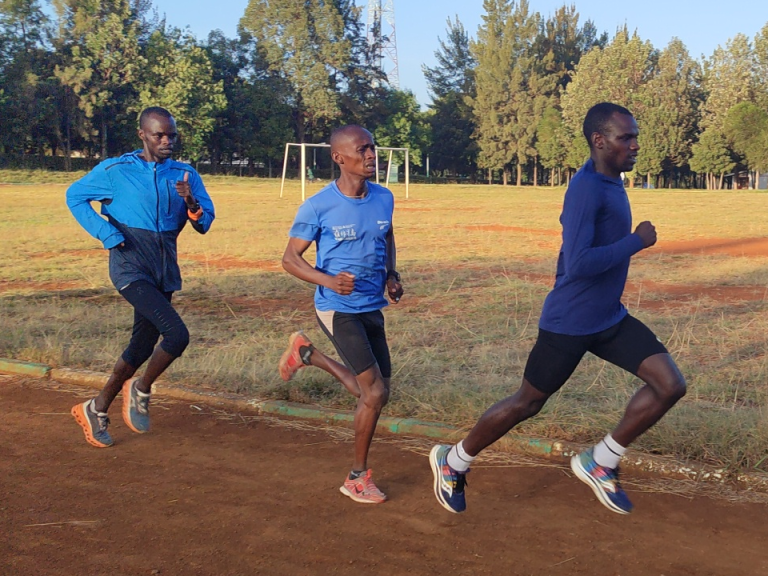

Kenyan runners face the greatest challenges in the world, but still rule

They say, “What doesn’t kill you makes you stronger.” This saying aptly applies to Kenyan runners, who often face challenges that eventually make them world champions.
The creative innovations they devise to remain in their training harden them and make them able to navigate the different challenges that a race day could throw at them.
Kenyan runners face various challenges in their training
Not all Kenyan runners have vehicles available for their long runs, but they still find ways to manage. Here are four typical methods that many Kenyan runners use to complete their long runs. Where there’s a will, there’s always a way.
First, several well-established athletic managements in the country run organised training camps. These camps allow Kenyan runners to train in large groups. Notable examples include Gianni Demadonna’s management and Dr. Rosa and Associates, among others.
Athletes in these groups have access to pickup trucks that transport them during their long runs. They receive water in bottles after every five kilometres, and coaches ride in the vehicles to monitor their pace and provide valuable updates.
The vehicles also offer support for athletes who may need to drop out before finishing the run. While this is an effective way to conduct long runs, not all athletes in Kenya have this privilege.
Many athletes who are financially well-off but not part of major training groups often enjoy the freedom of long runs due to having personal vehicles. This allows them to travel individually to their preferred training locations at their convenience. Some of these athletes may hire a driver, while others are driven by their spouses who also provide water during their runs.
This group is the most flexible, as they can complete their long runs wherever they choose and easily visit restaurants for refreshments without the inconveniences that larger groups may face.
In contrast, many Kenyan athletes do not own vehicles and must find ways to train hard in order to gain recognition in this competitive sport. The lack of a vehicle does not deter their commitment. A few athletes may hire motorcycle riders to carry water for them, and if the rider happens to be a coach, that is an added bonus.
Additionally, many Kenyan athletes have devised creative ways to complete long runs that exceed 38 kilometers, even without a vehicle. They plan routes that start and end close to their homes.
During the first hour of their long runs, they carry small plastic bottles or bags of water in their hands, which they drink from and then discard before increasing their pace.
However, starting long runs early in the morning when temperatures are cool can make it uncomfortable to hold onto water bottles while wearing lightweight clothing designed for running.
The only advantage of this approach is that athletes are compelled to finish their runs, as there are no vehicles available for a quick escape when discomfort arises.
This challenge trains them mentally to persevere through the challenges of a race.
Many financially well-off Kenyan runners who are not part of major training groups enjoy the freedom of long runs because they have personal vehicles. They can travel individually to their preferred training locations at their convenience.
Some of these athletes may hire a driver, while others are driven by their spouses who also provide water during their runs. This group is the most flexible, as they can complete their long runs wherever they choose and easily visit restaurants for refreshments without the inconveniences that larger groups may face.
In contrast, many Kenyan athletes do not own vehicles and must find ways to train hard in order to gain recognition in this competitive sport. The lack of a vehicle does not deter their commitment. A few athletes may hire motorcycle riders to carry water for them, and if the rider happens to be a coach, that is an added bonus.
Additionally, many Kenyan athletes have devised creative ways to complete long runs that exceed 38 kilometers, even without a vehicle. They plan routes that start and end close to their homes. During the first hour of their long runs, they carry small plastic bottles or bags of water in their hands, which they drink from and then discard before increasing their pace.
However, starting long runs early in the morning when temperatures are cool can make it uncomfortable to hold onto water bottles while wearing lightweight clothing designed for running. The only advantage of this approach is that athletes are compelled to finish their runs, as there are no vehicles available for a quick escape when discomfort arises.
This trains them mentally to persevere through the challenges of a race.
Many athletes who are financially well-off but not part of major training groups often enjoy the freedom of long runs thanks to their personal vehicles.
This allows them to travel individually to their preferred training locations at their convenience.
Some athletes may hire a driver, while others are driven by their spouses, who also provide water during their runs.
This group has the most flexibility, as they can complete their long runs wherever they choose and easily visit restaurants for refreshments without the inconveniences that larger groups may face.
Lack of adequate training facilities
In contrast, many Kenyan athletes do not own vehicles and must find alternative ways to train hard in order to gain recognition in this competitive sport. The lack of a vehicle does not deter their commitment. Some athletes may hire motorcycle riders to carry water for them, and if the rider happens to be their coach, that is an added bonus.
Additionally, many Kenyan athletes have devised creative ways to complete long runs that exceed 38 kilometers, even without a vehicle. They plan routes that start and end near their homes. During the first hour of their long runs, they carry small plastic bottles or bags of water in their hands, which they drink from and then discard before increasing their pace.
However, starting long runs early in the morning when temperatures are cool can make it uncomfortable to hold onto water bottles while wearing lightweight running clothing.
The only advantage of this approach is that athletes are compelled to finish their runs, as there are no vehicles available for a quick escape when discomfort arises. This trains them mentally to persevere through the challenges of a race.
Almost every seasoned Kenyan athlete has had to go for a long run using each of the above methods at some point in their career.
In all these long runs, it is advisable to keep some money in your pockets, just in case of any situation. You could get lost, get injured, or, if you are in a group of professional athletes from major camps, you might be left behind early in the run if the driver fails to notice you.
For example, if the run is 45 km long, it will be challenging to get back to camp on your own, especially if the vehicles have transported the athletes to a location far from the camp, say, 40 km away!
There are many great stories that emerge from running and training in Kenya. These include getting lost in the forest, being taken on a longer route than planned and having to stop and ask for help, or starting a tough workout with a group and then, understanding each other, quitting simultaneously.
There are also moments like dancing in the early hours of the morning to keep warm while waiting for other runners to arrive before starting a long run.
Whatever Kenyan athletes experience, besides running and training, brings them together as a community that deeply understands each other. Here is an example of a typical day in a long-distance training group in Kenya.
On the night of February 27, 2017, heavy rain fell throughout the night. After the rain, I woke up to a misty morning and jogged along the muddy, rough road toward the meeting point for my training group in Kimumu, Eldoret, for the Tuesday speed workouts. I wondered how we would manage an effective fartlek on such a slippery and muddy road surface.
A few athletes had already arrived at the starting point, so I decided to jog a little farther before turning back. However, as I approached the starting point on my return, I saw a pickup truck loaded with athletes who were shouting for me to hurry up and board.
The venue had been changed, and we were moving to a more favourable location elsewhere. The vehicle was going around collecting the athletes.
Media doesn’t focus on their positive stories
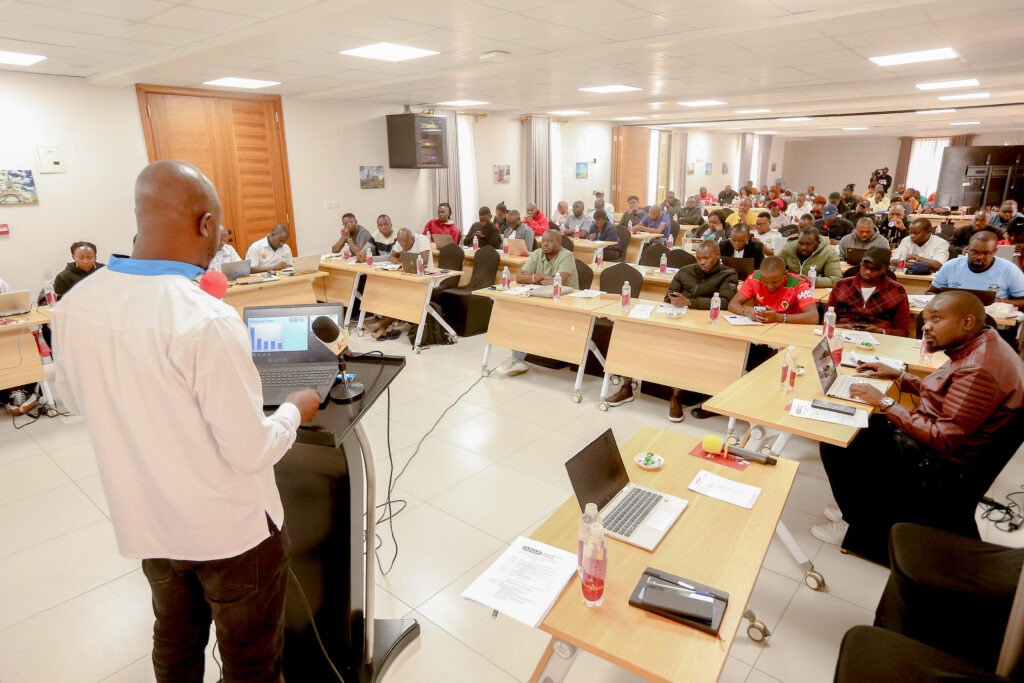
This is another amazing aspect of Kenyan athletes’ spirit that is often overlooked by the media. They fuel their vehicles and share them with other athletes without asking for any contributions.
There are many athletes in the Kimumu group of Eldoret who contribute to the group’s success, but I have been particularly impressed by two athletes who consistently offer their vehicles for long runs and occasions like this, when we need to travel to find good roads to train on.
Whether in the country or abroad, Wilson Erupe, the reigning Seoul Marathon champion, and James Kwambai, a former Kenyan marathon record holder, always made their vehicles available for the group’s athletes to use. I’m not suggesting they’re the only ones doing this.
As we began our journey, two other vehicles that had picked up athletes from different locations joined us. A total of five vehicles full of athletes arrived at the scene where we would conduct the fartlek.
With roughly 100 athletes specializing in various events ranging from 800 meters to the marathon, someone needed to give orders.
Erupe issued the program and emphasized that we should ensure everyone benefited from the workout, making it a collaborative experience rather than a competition.
And, as expected, when the alarm went off for the hard run, one could only hear footsteps and nothing else in the leading pack at the front where everyone seemed not to be breathing.
Then, as the alarm sounded to go easy, it would take about 10 seconds before some panting could be heard as the rest of the group would close in. But, the composition of the leading pack would change later in the run as sprinters gave way and the long distance runners took over.
Such is the advantage and excitement of being part of a large training group here in Eldoret.
The 28th of February not only marked the last day of training in February 2017, but the end of training on the dusty roads and tracks and the beginning of rainy season.
Both seasons are tough for Kenyan runners.
Rainy, muddy and dusty weather conditions
The dusty season, which usually begins around November and ends sometime in March, often sees many Kenyan runners get common colds and flu. Vehicles that pass by them during their training on rough roads cover them in clouds of dust.
Large training groups here also raise a lot of dust while doing their intervals on the rough tracks. In fact, most Kenyan runners leave a cup/packet of milk ready in their houses to gulp down the dust once they get back from their workouts.
The advantage with the dusty season is that you can train any time you choose.
When the alarm signaled the start of the hard run, the only sound came from the footsteps of the leading pack, where it felt as though everyone was holding their breath.
As the alarm signaled the shift to an easier pace, it would take about 10 seconds before the soft sounds of panting emerged as the rest of the group closed in. However, the composition of the leading pack would change later in the run, as sprinters fell back and long-distance runners took over.
This dynamic is part of the advantage and excitement of being part of a large training group here in Eldoret.
February 28 marked not only the last day of training in February 2017 but also the end of training on dusty roads and tracks, heralding the beginning of the rainy season. Both seasons pose challenges for Kenyan runners.
The dusty season, which typically lasts from November to March, often leads to many Kenyan runners suffering from common colds and flu.
Vehicles passing by during training on rough roads would envelop them in clouds of dust. Large training groups, too, generate a significant amount of dust while performing intervals on uneven tracks. In fact, many Kenyan runners keep a cup or packet of milk at home to wash down the dust once they return from their workouts.
The advantage of the dusty season is that you can train whenever you choose.
The rainy season too has its own disadvantages and advantages. Track intervals often have to be cancelled after heavy downpours.
Sometimes Kenyan runners, especially the track athletes, would wait almost half the day for the track to get better, so they can do some intervals even on one half of the track that gets better.
The advantage with the rainy season is that there are fewer colds and flu among the athletes and greener vegetables are cheaper and in plenty. So, life generally looks easier in the rainy season.
The rainy season has its own set of disadvantages and advantages. Track intervals often get canceled after heavy downpours.
At times, athletes, especially those training on the track, may find themselves waiting for nearly half the day for the track to improve enough for them to perform intervals, even if it means using just one half of the track.
On the upside, the rainy season leads to fewer cases of colds and flu among Kenyan runners, and the availability of fresh, green vegetables increases while they become more affordable. As a result, life tends to feel easier during the rainy season.
Doping allegations
Kenyan runners are facing significant challenges due to doping in three main ways:
Firstly, clean runners often find themselves uncertain about the integrity of their competitors. This uncertainty can lead to hesitation in giving their best during training, as they question whether their efforts will be in vain against potentially doped athletes.
Secondly, even when clean runners perform well, their achievements are frequently met with skepticism from fans and the public. This doubt can undermine their pride and self-esteem, as they grapple with the perception that their hard work and natural talent may not be recognized or valued.
Lastly, Kenyan runners who are part of the testing pool are required to follow strict whereabouts rules on a daily basis. This adds an additional layer of stress and pressure, as they need to ensure their compliance to remain eligible for competition, further complicating their training and personal lives.
Kenyan runners don’t have nutritionists and coaches
Kenyan runners often face a challenging landscape when it comes to coaching and nutrition.
A significant number of semi-elite runners find themselves self-coached due to limited earnings from their sport. The financial constraints make it difficult for them to hire professional coaches who could help refine their training techniques and strategies.
Moreover, many runners do not seek the services of sports psychologists and nutritionists, as funding for these essential aspects of training is often unavailable. Sponsorship opportunities are limited, leaving them without the guidance that could enhance their performance and overall well-being.
Only a few well-established training camps, primarily catering to the country’s top elite runners, have the resources to employ dedicated coaches and physiotherapists.
This disparity creates a hurdle for many talented Kenyan runners who could thrive with access to more sophisticated coaching and professional support in nutrition and mental preparation.