
Run for fitness, not to compete; what I swore in 2020
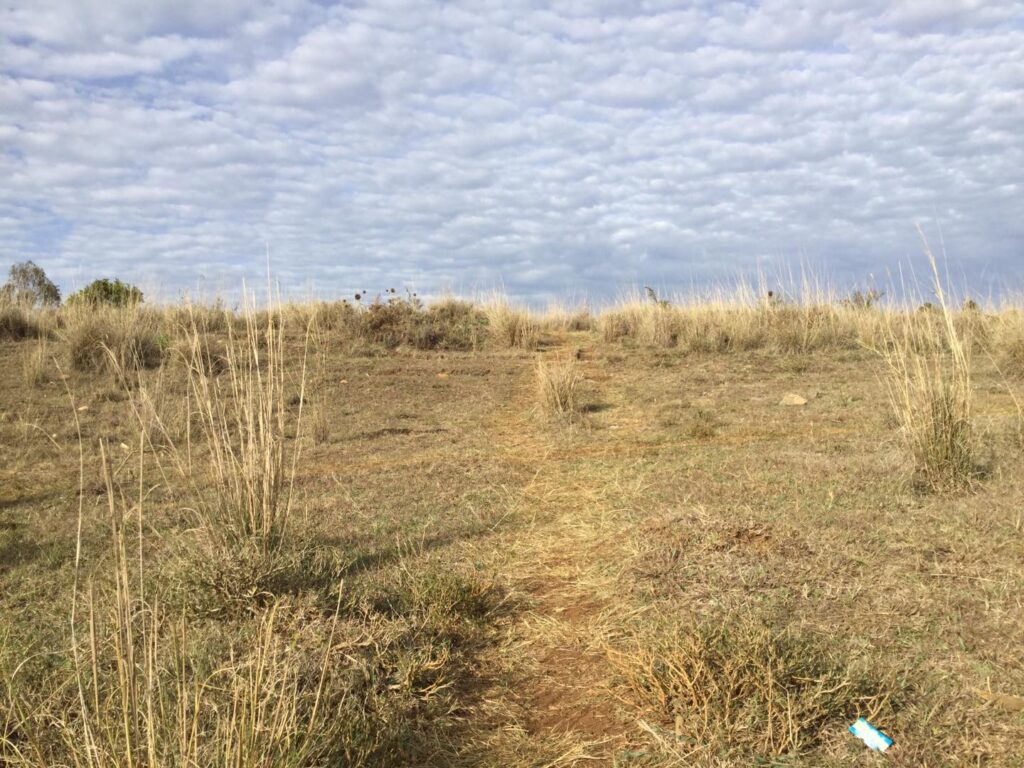
In the 1990s, I lived around 5km away from my primary school. School rules required that the upper primary pupils report to school by 5:30 AM. Three pressure lamps lit the rooms, allowing us to revise before there was enough natural light from the rising sun.
However, we had a problem. No one had a watch. This won’t come as a surprise, given that we were actually running to school in total darkness, barefoot, not knowing what time it was.
I would run to school barefoot in the darkness
At the next village was a man called Jonjo, who lived in a grass-thatched hut conveniently on a hill and had a small radio. He would sometimes pierce the night’s silence by shouting and announcing the time at precisely 4 a.m. to wake up the rest of us who had neither a radio nor a watch. He was not reliable, though, and at times when he would oversleep, many pupils ended up getting late for school and getting punished.
At times, I would make a terrible mistake of thinking that it was already 4 AM and would go to school as early as 1 AM. The watchman would ask me to go back home, but remembering the scary bushes, the darkness, the insecure bridge I tiptoeed on to cross the river, and the dogs I had survived -having to climb random tress to dodge their sharp teeth- to reach school, I would gladly opt to sleep on the classroom’s cold cemented floor until other pupils would arrive.
Now, in 2020, I had all the shoes and a GPS-enabled watch, but still, I did not know when the next opportunity to race would present itself.
The COVID-19 season
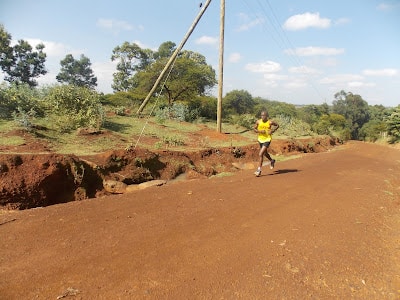
One morning, as I was running during the COVID-19 pandemic, my childhood memories flashed back. This brought up clear memories and soul-searching for me during my hill workout session, when, for a moment, I wondered why I would be training this hard when all sporting activities had been suspended in the country.
How hard and fast would one run when blindfolded and unsure of the distance they are still going to cover before hitting a wall?
We had similar instances in our training programs sometime in 2013 that seemed to have targeted situations like the one we faced in 2019 – 2020. When it was track workouts day, we would go to the track without knowing the specific workouts we would do. Only the coach knew. So, we learned how to push hard, not knowing when the pain would end.
How long can a runner keep training hard with no guaranteed opportunity to race and earn a living in the near future? This was the question causing sleepless nights to most Kenyan runners staying at different training locations in the country after sporting activities were suspended for a second year since the pandemic struck.
Although only forty runners—twenty men and twenty women — would have won prizes at the Eldoret City Marathon that was postponed, thousands of runners were affected so much by its cancellation. To many, it wasn’t just about the prizes but an opportunity to run good times to enable them to get invitations to future races and to get into any management.
Training for a marathon takes time, resources, and hard work.
Runners have had to endure waking up before the crack of dawn daily for months, when the rest of the population is fast asleep, to go for their morning runs. After their training, they need some time to rest, drink enough fluids, and nap before another easy jog in the evening. This leaves no room for them to go out again and do other extra income-generating activities.
Most runners rent accommodation around the high-altitude training centres so that they can benefit from group training and the effects of altitude on their bodies. Without alternative sources of income, it is hard to keep paying the monthly rent.
Under the old normal, runners used to pay their landlords up to six months in advance whenever they returned from their races. This would help build trust among them, and they would even be allowed to stay for a few more months without paying if they did not successfully earn any income from their running.
However, as the second year entered, most Kenyan runners did not have any opportunity to earn money from their running. It was getting harder and harder to stay at their training places without seeing some light at the end of the tunnel.
No occupation is guaranteed to provide a steady income
Just after the Eldoret City Marathon was cancelled, I met two runners, on different occasions, who had to give themselves a long break from running and would only come back to running after they had set up alternative sustainable sources of income.
“I did a course in electronics that I have not been putting into practice. For now, I already secured space to do a phone repair business in Eldoret town and hope that after about four months I will have established the business and get a good number of customers so that when I resume my running next year, I can easily employ an assistant in the shop and visit it after my training,” one of the runners told me.
One lesson that the COVID situation has and continues to teach us is that no occupation can provide a permanent livelihood, that life is unpredictable, and that adaptation is a valuable resource.
And so, after a great deal of soul searching, I think that my purpose for running slightly shifted that day from that of preparing for a race, into one where I now see a race as simply an opportunity to test my fitness level and not as the sole reason to excel.
After all, like in many instances, we usually stumble upon great opportunities while pursuing different things. For example, one could meet their spouse while scrolling through social media posts. Likewise, personal best times and even prizes could come out of a race that one intended to go out and have fun.
Lessons learnt
This way, I will never live to regret any outcome of a race I ever do, as the opportunity to race is an outstanding achievement in itself. Socialising with other runners, travelling, and getting physically fit are some of the added advantages of being a runner.
Running was, and will always be, part of my life, in light and in darkness. Most clients I coach online also come in to get fitter and enjoy participating in races as a hobby.