
Altitude Training: Why Ideal Science and Culture Favor Kenya
As a runner, coach, and sports journalist, I have witnessed first-hand the powerful impact that high altitude training environments can have on elite performance. North American stars like Desiree Linden and Reid Coolsaet have sought out Kenya’s legendary training grounds ahead of their biggest races, while Kenyan icons such as Hellen Obiri and Ednah Kiplagat have relocated to the US to tap into its unique resources. This reciprocal flow of talent across the Atlantic is a testament to each nation’s strengths—but it also raises an essential question: Which country truly offers the most compelling environment for long-distance running success? In the following comparison, I will highlight why the choice of training base is more consequential than ever for athletes aspiring to reach the pinnacle of the sport.
Kenya’s global reputation as the ultimate destination for long-distance running stems not just from its famed high-altitude training centers but from a unique combination of environmental and cultural factors. While several countries—including the US, Mexico, China, and Spain—also offer high-altitude regions, none have consistently produced world-class talent at the scale of Kenya. This leads us to ask: What is Kenya’s secret beyond altitude, and can the US truly replicate these advantages to create a training hub of equal stature?
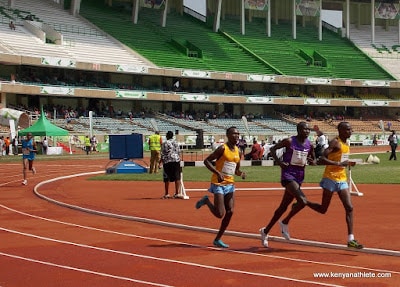
The discovery of high-altitude training as an effective way to boost endurance performance came to light coincidentally at a time when Kenya’s legendary runner, Kipchoge Keino, won gold in the 1500m and silver in the 5000m at the 1968 Mexico City Olympic Games. This marked the beginning of Kenya’s dominance in middle- and long-distance running at major global championships that followed.
That is when and why interest in the training environment and methods employed by Kenyan runners arose, with many runners flocking to running destinations in Kenya to find the secret for themselves.
For years, whenever the World Championships were scheduled to take place in a city outside Kenya, a remarkable number of international runners—often exceeding those who would actually compete—would make the pilgrimage to Kenya’s renowned high-altitude training centers. With Kenya now set to host the 2029 World Championships, it raises an intriguing question: Will this historic event further increase the influx of athletes seeking both world-class preparation and the advantage of acclimatizing directly at the championship venue? For many nations, training in Kenya ahead of 2029 could be the ultimate win-win scenario.
Live High Train Low: Proven Benefits of Altitude Training for Endurance Athletes
Much research and scientific study has examined the effects of altitude and hypoxia (natural or simulated) on the endurance of elite runners and athletes in General. Some recent research reported 1.6-1.9% (Bonetti & Hopkins, 2009) and 1.8-2.5% (Saunders, Pyne & Gore, 2009) improvements in endurance performance among runners who used high-altitude training methods.
Consider this: at the Olympic level, a performance improvement of less than 0.5% can mean the difference between winning gold or leaving empty-handed. Every fractional gain in training effectiveness becomes a decisive advantage—one that can define an athlete’s entire career.
Both Kenya and the USA have high-altitude regions where runners train. Boulder, Colorado lies at an altitude of around 5,430 to 7,000 feet above sea level, which is why most elite runners in the US have made it their training base. These conditions are similar to those in Kenya, especially in Iten.
Wilber (2011) reviewed both anecdotal and scientific evidence on altitude training models for endurance athletes. He found that the conventional “Live High + Train High” (LH + TH) approach, where athletes both live and train at altitude, often makes it difficult to maintain sea-level training intensity. Many athletes experience decreased “race fitness” and speed, and studies have shown performance declines after LH + TH training blocks.
To address this, the “Live High + Train Low” (LH + TL) model was developed. In LH + TL, athletes live (or sleep) at moderate altitude to gain the physiological benefits (like increased red blood cell mass) but train at lower elevations, allowing them to maintain higher training intensity. Research, particularly by Levine & Stray-Gundersen (1997), demonstrated that LH + TL leads to significant improvements in oxygen-carrying capacity (erythrocyte volume, hemoglobin concentration) and VO2max, and—critically—improvements in running performance (e.g., a 1% faster 5000-m run).
These performance gains persisted for up to three weeks after returning to sea level, and were not seen in either sea-level controls or LH + TH athletes. Subsequent studies in elite athletes and national teams confirmed these findings: LH + TL consistently improved both physiological markers and time-trial performance over LH + TH or sea-level training.
In summary, the LH + TL altitude training model allows endurance athletes to combine the blood-boosting effects of living at altitude with the performance benefits of sea-level intensity training, resulting in superior improvements in both physiology and race performance compared to LH + TH or sea-level training alone.
The choice between training in Kenya or the US goes far beyond altitude. It comes down to the powerful interplay of sponsorship opportunities, cost of living, and, perhaps most significantly, the deeply ingrained running cultures found in each country. These factors shape not just how athletes train, but whether they thrive.
Most sponsors, like running shoe companies, prefer to have their runners training in the USA because that is where most of their potential customers are, and the runners can easily influence them.
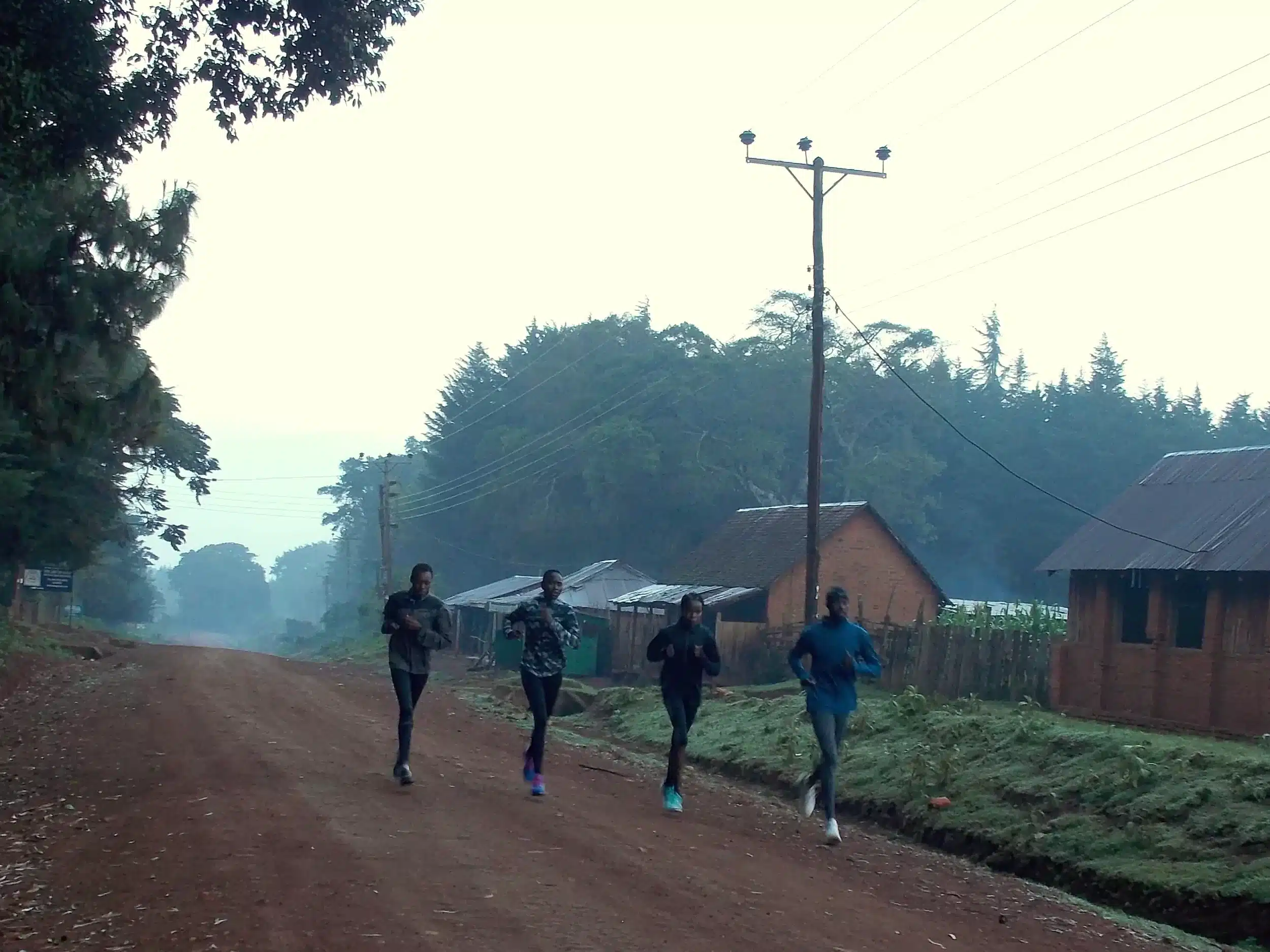
Kenya’s running culture is a magnet for serious athletes: a supportive, close-knit environment where runners train in groups, push each other to new heights, and benefit from affordable living costs. For those truly seeking an immersive, high-performance setting, Kenya offers an atmosphere that is hard to match elsewhere.
Besides natural high-altitude training destinations, some advanced training facilities now have high-altitude simulation tents that can be set up anywhere and subject a runner’s body to benefits similar to those at natural altitude.
Ultimately, the decision between Kenya and the USA is no longer just about altitude—it’s about finding the environment that best supports an athlete’s journey to excellence. Lifestyle, community, and daily living conditions now play a crucial role in determining where the next generation of champions will be made.