
The True Value of a Kenyan Coach Beyond the Kenyan Bracelet
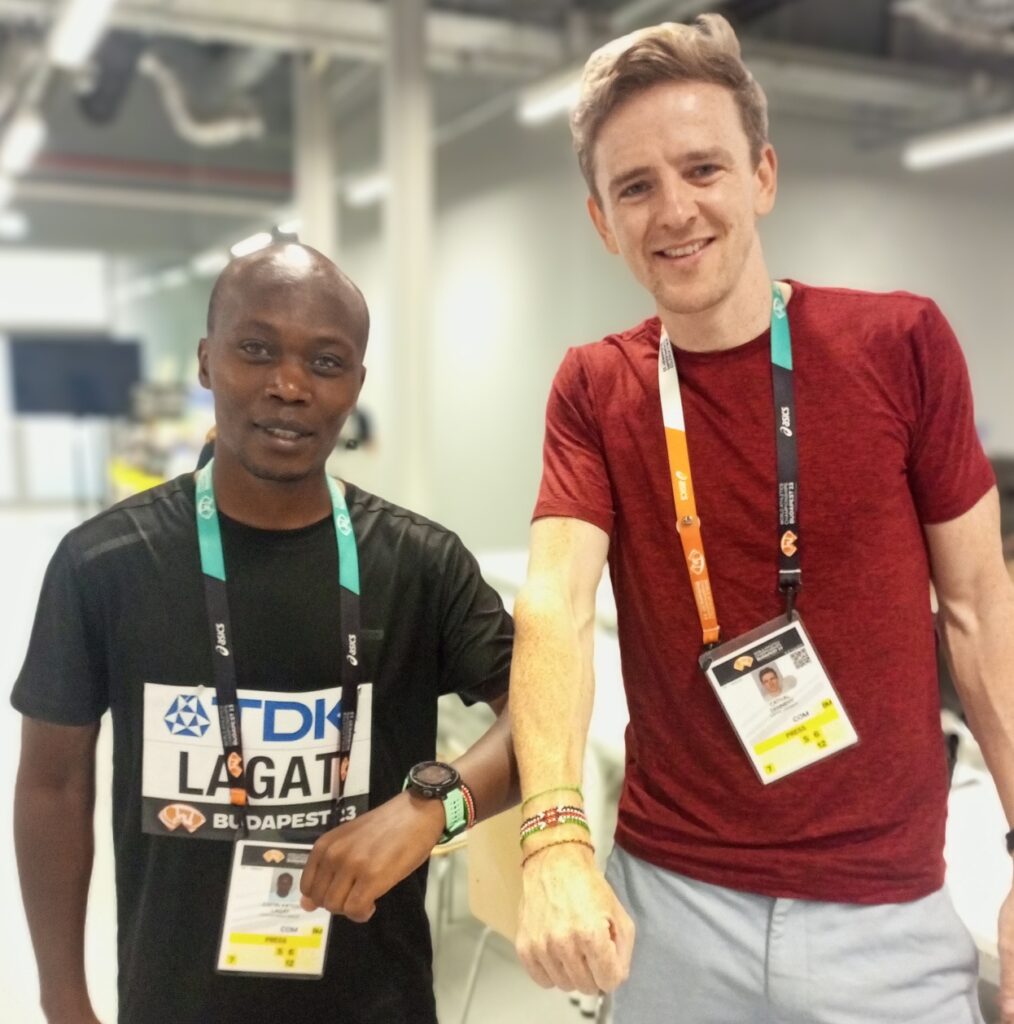
Steven Vanlancker, a runner from Belgium, decided to work with a Kenyan coach to guide his training online. Not only did he learn a great deal about Kenyan training methods, but his running experience also improved significantly.
Benefits of having a Kenyan coach
“I’m amazed it took travelling over 6,000 km for me to finally understand what ‘easy’ really means,” Vanlancker told me as we sat sipping hot tea one sunny afternoon at Iten Club in Kenya.
Vanlancker, one of my online coaching clients from Belgium, is known for his endless questions whenever I send him his weekly training program. He often wants to know the exact pace for every run I assign. However, after coming to Kenya and experiencing a few runs, he realised that an “easy” pace on certain routes can sometimes feel more challenging than his hardest efforts back home. This taught him the importance of listening to his body and running by feel, rather than strictly following the pace on his watch.
He immediately fell in love with Iten upon arrival.
Shortly after arriving at the High Altitude Training Centre in Iten, Steven sent me a picture with the simple message: “I am eating,” as I tried to reach him by phone.
“It’s an inspiring place. It’s almost impossible to resist going out for a run here at any time,” he said—demonstrating this by heading out for a 1 hour 25 minute run when I had only scheduled one hour. He even added a 45-minute run in the afternoon on a day meant for recovery.
All of this was fine, as I had intentionally given him fewer structured workouts that week so he could have extra time to explore Iten and enjoy his first-ever trip to Africa.
In Iten, there are so many runners of different abilities out there running at different times throughout the day, from sunrise to sunset; it’s incredibly tempting not to join some of them, especially when you have a Kenyan coach encouraging you to immerse yourself in the local running culture.
On Thursday, he joined a group of about 100 athletes for a Fartlek Run, which was also another great experience for him. I asked him later if he was able to see the leaders for the next 3 minutes after the Fartlek Run started, and he laughed, “Unless you mean 3 seconds!”
Below are some of the things that puzzled him after his short stay in Iten.
He wondered why some runners would spend a lot of their money on books that claim to help them improve their running, rather than on a Kenyan coach who would monitor their progress and advise them personally.
Comparing a Kenyan coach with Kenyan bracelets
“Besides the fact that there is no one-size-fits-all approach to running, books can never provide feedback to the daily challenges that a runner may encounter in their day-to-day training. Only a coach can do that,” said Steven. “I think the value of having a Kenyan coach is so much more than that of buying Kenyan bracelets, Kenyan national team kits, and visiting Iten, all combined. A Kenyan coach brings a unique perspective, expertise, and motivation that can’t be found elsewhere,” he added.

Secondly, he wondered why some foreign runners would come in search of a Kenyan running experience, yet still get a private car arranged to take them to the Fartlek Run starting point, merely 5km away, while the Kenyan runners are actually jogging there!
He also wondered why some foreign runners would travel all the way to Kenya to discuss ice cream, protein shakes, recovery drinks, etc., instead of focusing more on Kenyan food, culture, and lifestyles.
According to him, most of the books, programs, and products out there on running are designed to satisfy people who “want to hear good things about their bad habits” rather than to help them improve their running.
At the end of it all, Steven learned that 90% of what it takes to become a successful runner actually comes from pure hard work and daily runs. Everything else, from shoes to supplements, accounts for the remaining 10%.
In short, having a Kenyan coach is much more valuable than buying Kenyan jerseys and bracelets. The guidance, cultural insights, and personalised feedback that a Kenyan coach provides cannot be matched by souvenirs or generic training plans. For runners seeking genuine improvement, embracing the mentorship and philosophy of a Kenyan coach opens the door to a deeper, more rewarding running journey—one that goes far beyond surface-level experiences and taps into the heart of what makes Kenyan running so exceptional.