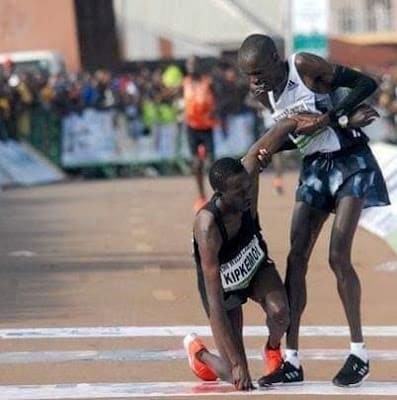
How Different Marathon Workouts Build Synergy for Peak Performances
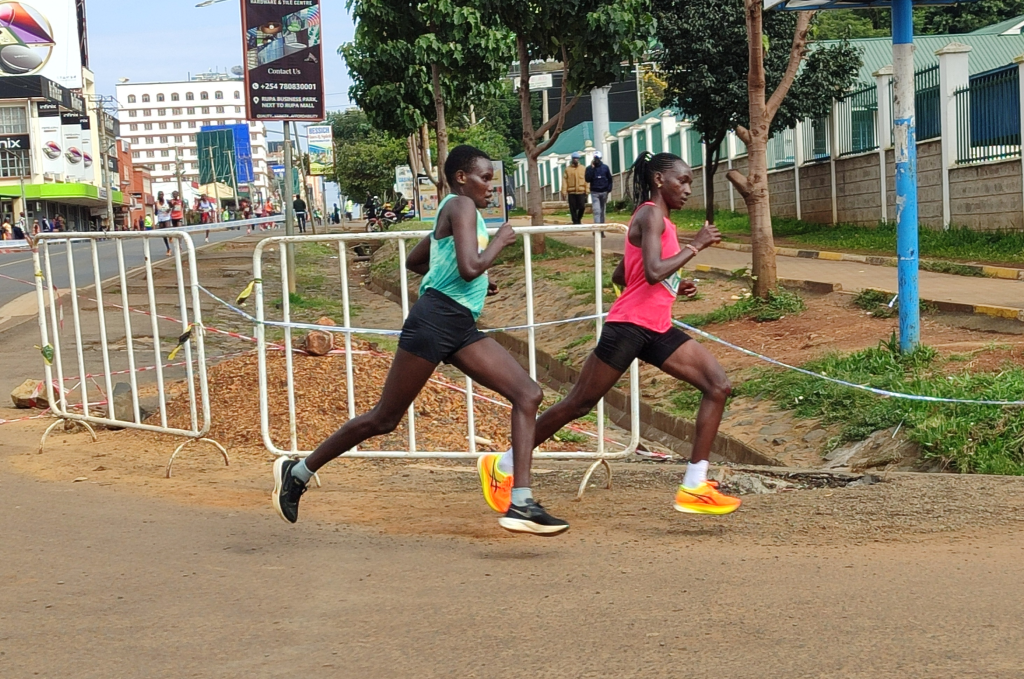
Training for a marathon isn’t just about logging miles—it’s a wild, challenging, and sometimes comical adventure, where different marathon workouts lend their own special magic (and sometimes aches) to the next.
Think of it as a team sport, with each different marathon workout showing up in its own costume: the wise long run, the dramatic tempo, the speedy interval, the stubborn hill, and the easy-going recovery. Each one not only helps you get ready for race day, but also secretly helps the others do their job even better. Let’s step into the shoes (or very tired sneakers) of a marathoner and see how these workouts blend together—not just making the journey possible, but making it a story you’ll laugh about later.
Long runs, hill workouts, speed workouts, track intervals, tempo runs, and other marathon-specific workouts aren’t just about getting you ready to conquer your race—they’re like a quirky cast of characters in your training sitcom. They rely on each other for support and comic relief.
Find yourself gasping through intervals? Good news: those long, slow runs might just make those intervals seem less cruel next time. And after a few hill repeats, you’ll start seeing every speed session as a victory lap. It’s all connected—sometimes in ways that will have you shaking your head (and legs) in surprise.
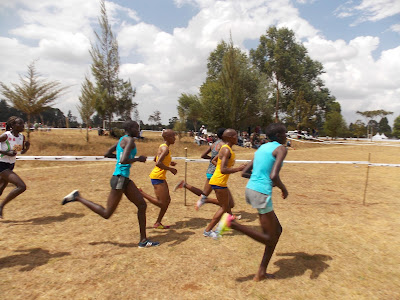
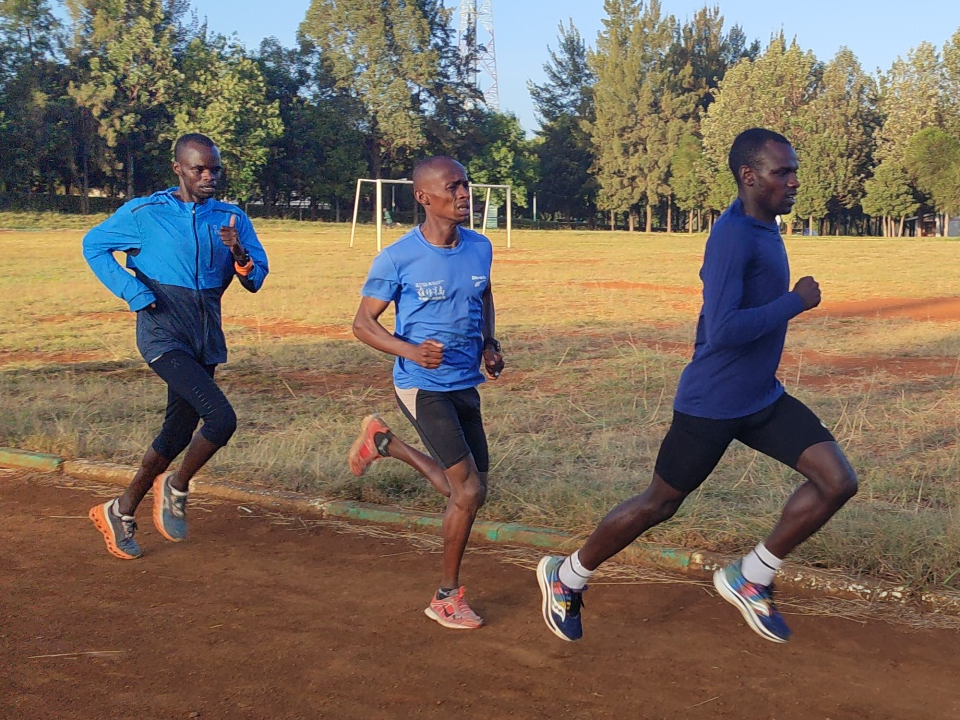
Some time back, circa 2012, I joined a training group that included Mark Kiptoo (former World Military Games Champion) and Micah Kogo (former 10,000m world record holder) for some track intervals at the University of Eldoret track. I managed to hang on for a few intervals, then watched them disappear into the horizon as I gasped and flailed through the rest.
Afterward, their coach offered a knowing smile (the kind you get from someone who’s seen a lot of runners struggle on that track) and told me I needed more hill workouts and a few more of the easier, longer runs before joining the group again. In other words, my training needed a little more sitcom synergy and a little less solo heroics.
That day was my wake-up call: some workouts aren’t just about suffering through the moment—they’re designed to make the other workouts easier (or at least, survivable). That’s the real genius of marathon training: periodization, teamwork, and a dash of humility.
The different marathon workouts and how they blend
1. Long Runs
Description:
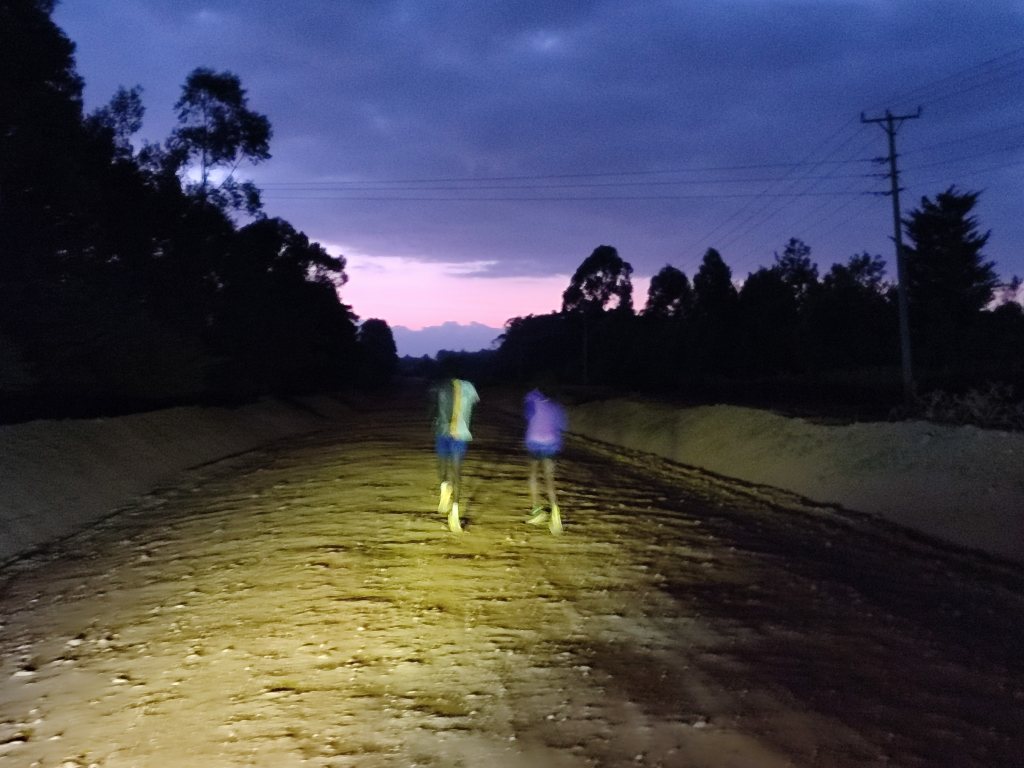
This is a common scenario for many marathon runners: It’s early Sunday morning, the world is quiet, and you’re setting out for a run so long you actually have time to ponder the mysteries of the universe (or at least what you’ll eat for breakfast).
Long runs are your weekly “journey on foot”—they’re slow, steady, and sometimes sneak in a few marathon-pace miles just to keep you honest. By the end, your legs are tired, and your playlist is exhausted.
Purpose:
- – Builds the kind of deep, stubborn endurance you only discover after hours on your feet, when your thoughts get weird, and your snacks become sacred.
- – Teaches your body to burn energy like a hybrid car—efficient, steady, and able to run on empty when needed.
- – Helps your mind get comfortable with being out there for the long haul, because a marathon is as much a mental adventure as a physical one.
How it helps other workouts:
- – After conquering a long run, tough tempo and interval sessions seem less daunting—suddenly, running hard for a few minutes feels like a walk in the park compared to your epic odyssey.
- – Your body learns to recover better, so you bounce back faster for your next speed or tempo workout (and maybe even that impromptu dance party in your kitchen).
- – You start to trust yourself: if you can handle a long run, you can handle anything your training throws at you—bad weather, missed alarms, or even that one friend who always wants to sprint the last mile.
2. Tempo (Threshold) Runs
Description:
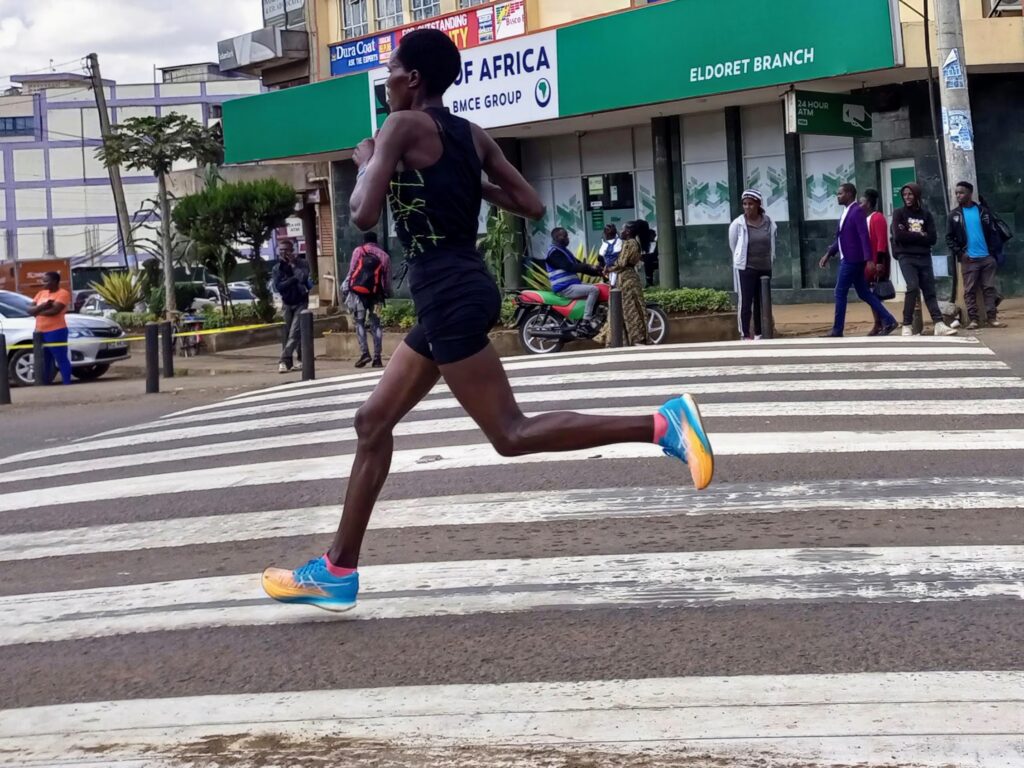
Tempo runs are the drama queens of marathon training—they’re all about “comfortably hard” effort, that magical pace where you’re working, sweating, and possibly negotiating with your legs to just keep moving. These runs teach you to settle into discomfort, finding your groove right at the edge of your comfort zone. If you’ve ever held a conversation with yourself about quitting, only to keep going, you know you’ve nailed a tempo run.
Purpose:
- – Trains your body to hold a quicker pace for longer stretches, so you can chase down goals (and maybe that speedy runner ahead of you).
- – Builds mental grit, teaching you to stay strong when the going gets tough.
- – Makes marathon pace feel more manageable, so you can approach race day with less dread and more swagger.
How it helps other workouts:
- – The confidence and strength you gain here spill over into long runs—late miles feel possible, and maybe even fun (well, almost).
- – Tempo runs sharpen your ability to finish intervals strong, even when you’re tired—think of it as adding a turbo button for those last reps.
- – They set the stage for marathon pace runs, making race-day pace feel less intimidating and much more familiar.
3. Marathon Interval Workouts (Speed Work)
Description:
Interval workouts are the roller coasters of marathon training: short, intense bursts—think 400m, 800m, or mile repeats—run at a pace that makes you question your sanity, followed by glorious, life-affirming jog breaks.
It’s where you rediscover your top speed (or at least, your top speed for this decade) and develop a whole new respect for the track, your watch, and maybe your own lungs.
Purpose:
- – Boosts your speed and running efficiency, so you can channel your inner cheetah (or at least outrun a startled squirrel).
- – Teaches your legs to turn over quickly and your mind to handle discomfort—or, as runners call it, “learning to suffer with style.”
- – Makes you feel powerful and fast, even during those marathon miles when everyone else is slowing down.
How it helps other workouts:
- – After intervals, marathon and tempo paces feel easier by comparison—you’ve trained your body to handle hard work, so race pace feels almost relaxed (almost).
- – Intervals build the leg strength and turnover that help you finish long runs with a flourish, not a slog—you might even have enough left for a victory fist pump.
- – Your ability to recover between hard efforts improves, making every workout more productive (and keeping you one step ahead of your training buddies).
4. Marathon Pace Run Workouts
Description:
These runs let you rehearse your goal marathon pace—sometimes as standalone runs, sometimes woven into long runs.
Purpose:
- – Teaches you what marathon pace feels like in your body and mind—so, on race day, your legs know what to do even as your brain is busy planning your victory meal or wondering if you’ll ever feel your toes again.
- – Builds unshakable confidence and trust in your ability to hit your goal pace, because you’ve practiced it on tired legs and in every kind of weather (and maybe even with a shoelace untied).
- – Helps you dial in fueling and hydration strategies under real-life, sometimes messy, conditions—think spilled water, sticky gels, and the desperate search for a bathroom that’s actually open.
How it helps other workouts:
- – Practicing marathon pace during long runs or after intervals gets you used to running strong when tired—just like in the toughest miles on race day, when your legs are staging a protest and your mind is writing motivational slogans.
- – The strength and mental stamina from tempo and speed work help marathon pace feel steady and sustainable, so you can cruise through tough miles instead of slogging.
- – Knowing your marathon pace inside-out prevents surprises on race day. You’ll be the calm, collected one passing the “excited starters” who went out too fast—and you’ll do it with a knowing smile (and plenty left in the tank).
5. Recovery Runs
Description:
Recovery runs are the unsung heroes of marathon training—the easy, no-pressure jogs where your only real goal is to enjoy moving. Picture yourself shuffling along at a pace where you can recite movie quotes, wave at every neighbor, and even stop to pet a friendly dog. These runs are less about performance and more about loving the process (and maybe your favorite playlist).
Purpose:
- – Flushes out soreness and speeds up recovery—think of it as a spa day for your legs, minus the bathrobe and cucumber slices.
- – Lets your body absorb all the hard work you’ve put in. The magic happens when you go easy: your muscles repair, adapt, and grow stronger while you shuffle through a mellow run.
- – Gives your mind a chance to breathe, wander, and reset. You might even solve a life problem or two mid-run.
How it helps other workouts:
- – Allows you to come back fresher and stronger for your next long run, tempo, or interval session. Your legs will thank you by not staging a mutiny halfway through a tough workout.
- – Maintains your mileage and aerobic fitness without burning out the engine, keeping your training rolling for the long haul.
- – Helps you avoid injury by keeping your training sustainable. Sometimes the bravest—and smartest—thing you can do is take it easy, so you’re ready to crush it when it counts.
6. Hill Marathon Workouts

Description:
Hill workouts are where you and gravity have your weekly showdown. These sessions might involve short, hard sprints up a steep hill (cue the dramatic movie soundtrack), or longer, steady climbs that leave your calves singing and your lungs wondering if you’ve moved to a higher altitude. Forget fancy gym memberships—nature’s gym is open to all, and it’s always challenging.
Purpose:
- – Builds powerful legs and a strong running form. Hill repeats are the original leg day—minus the squat rack, plus a lot more fresh air.
- – Improves your ability to run efficiently, even when tired. After a few hills, flat ground feels like a treat and your stride feels smoother than ever.
- – Makes you mentally tough—no one ever forgets a tough hill session! If you can conquer that endless incline, finishing a race or surviving a Monday will seem easy by comparison.
How it helps other workouts:
- – After mastering hills, flat tempo and marathon pace miles feel easier—suddenly you’re gliding where you used to slog.
- – The strength from hills gives you a kick for finishing strong during intervals and long runs. When your legs are tired, you’ll find a hidden reserve of power stashed away from all those climbs.
- – Hill training prepares you for any course—rolling, flat, or hilly. Come race day, you’ll look at the course map and smile knowingly, ready for whatever bumps come your way.
Different Marathon Workouts All Come Together as a Team
Marathon training is a team sport, and every specific workout is a teammate. Long runs give you the stamina to fuel your speed.
Tempo runs teach you to hold on when things get tough. Intervals remind you how fast you can go. Marathon pace runs build trust in your race plan.
Recovery runs keep you healthy and resilient. Hill workouts make you strong from the ground up.
When you cross the finish line, you’ll feel every stitch of this tapestry—woven together, each workout making the others stronger, and you stronger than you ever thought possible.